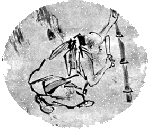
Hui Neng the Sixth Patriarch of Ch'an - Meditation School (638-713)
Hui Neng chopping bamboo There is no spiritual practice that reveals our authentic nature (budhahood), because whatever we do is spiritual. That is why the master is not represented in statuary positions but in the midst of daily activities |
|
Hui Neng, known as the Sixth Patriarch of the School of Meditation (Ch'an) - also called the School of South or the School of Sudden Awakening - earned his nomination in a very original way. His story illustrates a main item of Taoist philosophy:
the conviction that the enlightenment is not related with the school education of the follower - if he is or not literate - nor by the diligence of studying sacred texts. The enlightenment is what one awakes to, that can not be earned. Who Was Hui Neng
Hui Neng was poor and illiterate, with no special education, when he overheard the verses of a sacred sutra. He felt suddenly attracted by them and decided to go to the Tung Ch'an abbey placed on Huang Mei county, run by Hung Jen (601-674), in order to study the dharma (the way that leads to
enlightenment and pain release).He has his first dialogue in this respect with the titular Patriarch, when asserting an essential item of the School of Sudden Awakening: all people, regardless their social, cultural or spiritual condition, possess the Buddha-nature. The Buddha-Nature Buddha-nature is not the fruit of one's efforts; it can not be earned by virtue - namely a moral, virtuous conduct - or by study. It represents the inborn quality of mind, given to all people with no exception, whereon all of us should get awaken. The awakening is not a mediate, but a sudden, instantaneous process. The texts about Hui Neng published on this site illustrates his doctrine, which is in fact a non-doctrine, as it asserts nothing, imposes nothing, proposes nothing! |